
















Medical
Marketing
Posted on Dec 8, 2025
Image Credit:
Image Credit:
File ID 176590615 | © Mikhail Primakov | Dreamstime.com
Share: 





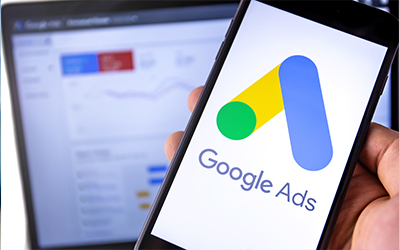
Healthcare advertising is unlike any other industry. Patients search with urgency, intent is specific, and demand is limited by need. Yet many practices receive broad recommendations from Google Ads advisors and automated AI systems that simply do not align with the realities of specialty care.
Google’s advisors often push budget increases, broad match keywords, and full automation. These tactics may help high volume industries, but they frequently cause problems for medical and dental specialties where search volume is lower and patient intent is sensitive.
The core disconnect is that Google’s recommendation engine is built on massive cross-industry data patterns, not the realities of highly regulated or niche healthcare services. Healthcare search demand is limited by urgency patterns, referral behavior, insurance considerations, and compliance-driven patient journeys. Google’s automated systems do not account for any of these constraints.
Broad keywords often do not benefit many healthcare advertisers because they attract users with general or unrelated intent. In medical specialties, patients typically search with very specific needs, symptoms, or service terms. When broad match is applied, campaigns begin capturing queries outside the scope of the specialty, leading to low quality clicks, irrelevant leads, and inflated costs. Google's algorithms interpret low volume as an issue to fix, not an accurate reflection of limited but high intent patient demand.
Google may then suggest doubling budgets or expanding geographic reach to “increase traffic.” While advertising can absolutely stimulate demand for elective or awareness driven healthcare services, the platform often recommends budget levels or service areas that exceed what local or independently owned practices can realistically support. Most specialty clinics operate with defined monthly budgets, and automated recommendations can cause overspending, premature budget depletion, or inefficient bidding patterns if followed blindly. The imbalance occurs when Google’s system assumes corporate level scalability, while many healthcare practices must optimize for efficiency, sustainability, and cost-conscious lead acquisition rather than maximizing total volume. When the platform pushes options such as:
It is usually because the algorithm interprets low volume as a problem rather than a natural characteristic of the medical specialty.
Another key factor is how Google’s advisors and internal specialists are incentivized. Their KPIs typically emphasize:
They are not evaluated on:
This means their recommendations tend to favor scale, automation, and expansion even when a healthcare advertiser needs precision, control, and relevance. The result is advice that potentially pushes campaigns toward higher traffic but lower quality, which is counterproductive in medical environments where intent is narrow and each click must count.
Healthcare specialties also operate within narrow, high intent funnels. Patients searching for very specific services are usually demonstrating direct need, not casual interest. Because of this, specialty campaigns rarely benefit from:
These automated tactics dilute targeting and introduce noise into a funnel that requires clarity and accuracy. Yet Google continues to push them because they align with the platform’s preference for volume and machine learning inputs, not healthcare’s requirement for qualified patient acquisition.
In short, Google’s systems and advisors are designed to optimize for more activity, while healthcare advertisers must optimize for better quality. This fundamental misalignment is why so many medical practices receive suggestions that feel out of touch with their goals, constraints, and actual patient behavior.
Many practices worry when Google reports an optimization score below 100 percent. The truth is that a well optimized medical campaign will naturally plateau. Once targeting, bidding, and ad copy are dialed in, most additional recommendations offer no meaningful value.
Yet Google continues suggesting:
These do not indicate underperformance. They simply reflect Google’s need to encourage activity, even when unnecessary.
Google’s budget models are built for industries with large audiences, fast conversion cycles, and high data volume. Specialty medical practices rarely operate under those conditions. Most healthcare services experience limited but high intent search demand, much of which is determined by need and local patient behavior patterns rather than marketing reach.
Because of this, many medical advertisers reach natural saturation at modest budgets. Increasing spend beyond that point does not always increase patient leads and often raises cost per acquisition. Instead of following automated suggestions that push for higher daily budgets or expanded geography, practices should base spending on true market demand and measurable opportunity.
To make informed decisions, healthcare advertisers should evaluate three critical data signals inside Google Ads and Keyword Planner:
1. Impression Share and Search Lost IS (Budget)
Impression Share shows the percentage of total eligible searches where the ad appeared. Search Lost IS (Budget) reveals how often ads failed to show due to insufficient budget.
This metric helps determine whether a practice is actually missing opportunities or whether the current budget already aligns with demand.
General guidelines:
2. Local Search Volume in Google Keyword Planner
Every specialty has limited local search volume. Understanding actual monthly search ranges prevents unrealistic budgeting. For many medical services, monthly volume may fall anywhere between 100 and 3000 searches depending on the procedure, region, and urgency.
Advertisers cannot create demand beyond what exists, but they can influence elective interest. The challenge is balancing awareness tactics with budget constraints and lead quality goals.
3. Cost Per Click Thresholds
Each medical specialty has natural CPC ranges. Spending below these thresholds results in too few auction entries. Spending above them inflates costs without producing more qualified traffic.
Typical CPC ranges in healthcare include:
Budget planning should reflect the number of clicks needed each month multiplied by the realistic CPC for the market.
For sustainable success, specialty campaigns should focus on:
These strategies ensure your ads reach the right patients without wasting budget.
Google Ads can be exceptionally effective for medical and dental specialties, but only when guided by human expertise and specialty specific insight. Automated recommendations and advisor pressure often work against your goals.
Medical professionals should confidently override suggestions that do not align with true patient behavior or realistic demand. Successful campaigns rely on precision, data quality, and strategic control rather than broad automated tactics. If you would like help refining or evaluating your campaigns, we are here to support you.
File ID 176590615 | © Mikhail Primakov | Dreamstime.com
Share:


 Copyright 2021-2026