














Medical
Marketing
Posted on Dec 23, 2025
Image Credit:
Image Credit:
ID 70332261 @ Denisismagilov | Dreamstime.com
Share: 




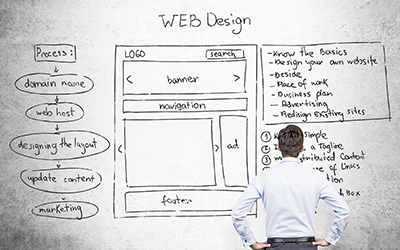
Many medical practices and businesses invest heavily in SEO, PPC, and digital marketing, see website traffic increase, and still experience fewer leads, form fills, or phone calls than expected. When this happens, the instinct is often to question marketing performance. Are SEO campaigns working? Is PPC advertising effective? In reality, the problem is frequently the website itself. A website is not just a digital brochure. It is the final and most critical stage of the digital marketing funnel.
This article explains how websites, SEO, and PPC work together, why template and WordPress websites often fall short, and when it may be time to rethink the website foundation entirely.
A common misconception is that SEO, PPC, and the website all do the same job. They do not.
Think of SEO and PPC as the methods that bring people to your front door, like a sign holder or promotional rep standing outside the store enticing new traffic to enter. SEO traffic includes both general and high intent users, while PPC traffic allows marketing agencies to focus more precisely on high intent audiences based on search terms, location, timing, and intent signals.
Key SEO or PPC metrics
When evaluating top of funnel marketing strategies, several key performance indicators help determine whether SEO and PPC are doing their job. These include:
If website traffic meets or exceeds industry benchmarks, it is a strong signal that visibility strategies are working. Additionally, when visitors remain on the site beyond a basic evaluation window, generally longer than 10 to 20 seconds, and trigger multiple engagement events, it indicates that qualified and high intent traffic is being successfully directed to the website.
Once visitors arrive, the responsibility shifts entirely to the website. The website must guide, educate, reassure, and build enough confidence for someone to take the next step. If the website is not designed to support marketing strategy, no amount of traffic will reliably increase lead generation.
The Marketing Funnel Starts Before the Website
SEO and PPC serve the top and middle of the marketing funnel. Their purpose is to:
SEO and PPC do not close the deal. The website is where conversion happens. It must:
When website traffic is strong but conversions are weak, the breakdown is rarely traffic quality. It is almost always a failure in how the website supports decision making.
For many industries, especially professional services, healthcare, or elective related services, users do not arrive fully informed. Unlike consumer products that people grow up around, many healthcare services require patient education and explanation before commitment.
A marketing driven website must assume that visitors need context before they are ready to take action. They need to clearly understand what the service is, who it is designed for, how it works, and why it is worth their time and investment. When a website asks users to contact you before answering those fundamental questions, it often creates hesitation rather than confidence. If your website is not fully using the opportunity to educate, reassure, and highlight the benefits of your services, visitors will simply continue their research elsewhere and choose a competitor that does.
This is why content depth, story flow, and intent based messaging play such a critical role in website conversion optimization.
WordPress, along with DIY website builders such as Wix and Squarespace, are designed to make website creation accessible, fast, and cost efficient. Their primary function is convenience. They provide pre-built themes, templates, and visual editors that allow websites to launch quickly without advanced technical expertise.
These platforms are excellent for managing content and establishing an online presence. However, they are not inherently designed around marketing strategy, conversion psychology, or complex buyer journeys. As a result, many websites built on these platforms prioritize layout consistency and technical functionality over intent driven storytelling, education, and lead conversion.
Industry testing consistently shows that incomplete storytelling, limited page content, legal heavy consent language, generic calls-to-action, or one-size fits all forms can reduce conversion rates by approximately 20 to 60 percent, particularly for high intent and elective services. Based on observed user behavior and engagement metrics, these elements will likely contribute to the decline in form submissions or calls.
WordPress itself is not the problem. The issue arises when websites rely heavily on templates and page builders without adapting them to a specific marketing strategy.
Template driven websites are designed to:
They are not designed to:
As a result, many websites look professional but fail to market and convert. Calls to action become generic. Content becomes shallow. Forms attempt to serve every audience at once. Templated websites technically work, but they do not persuade, entice, or guide audiences to take action.
If current marketing efforts are successfully generating visibility and traffic, indicating strong interest and demand, the primary opportunity lies in improving how the website informs, reassures, and guides visitors through the decision process before asking them to take action.
Certain industries, particularly luxury or elective services, require a higher level of contextual education and trust building, as many visitors may be unfamiliar with the service, timelines, or expected outcomes. By strengthening page level content, clarifying value propositions, improving call to action structure, simplifying forms to better match the visitor journey, and aligning design with audience expectations, the website can more effectively move users from evaluation to commitment. These improvements allow existing traffic to convert at a higher rate without increasing media spend.
A marketing strategy website is intentionally built to support conversion at every stage of the journey. It includes:
These elements work together to move users from curiosity to confidence to action.
In some cases, incremental optimization is sufficient. Updating content, improving calls to action, simplifying forms, and refining layouts can significantly improve performance when the underlying structure supports those changes.
In other cases, limitations are structural. A website rebuild becomes the more efficient option when:
A rebuild is not an admission of failure. It is often a response to real performance data and a desire to align the website with growth goals.
Website traffic alone does not drive growth. SEO and PPC are powerful tools for creating visibility and demand, but they can only perform as well as the website they support. When traffic is strong yet leads are declining, the issue is rarely isolated to marketing channels. More often, it is a sign that the website is not fully aligned with marketing strategy, user intent, or the decision-making process required for high trust services.
For healthcare and dental practices in particular, the website plays an outsized role. Patients and prospective patients require education, reassurance, and clarity before taking action. A strategically built website must support longer consideration cycles, communicate value clearly, and reduce friction at every step of the conversion process. Without this foundation, even well executed SEO and PPC campaigns will struggle to deliver consistent results.
At Medical Marketing Guru, we specialize in healthcare and dental marketing, with a focus on strategic website optimization, SEO, PPC, and conversion focused design. Our approach goes beyond driving traffic. We evaluate how marketing channels, website structure, content, and user experience work together to support real medical business outcomes. Whether the solution involves optimizing an existing website or planning a strategic rebuild, our goal is always the same: turning qualified traffic into meaningful patient inquiries and sustainable growth.
If your website is generating visits but not delivering the leads you expect, it may be time to look beyond traffic and evaluate the strategy behind the site itself. Medical Marketing Guru is here to help assess where the funnel is breaking and identify the most effective path forward.
ID 70332261 @ Denisismagilov | Dreamstime.com
Share:



 Copyright 2021-2026