












Medical
Marketing
Posted on Apr 13, 2026
Image Credit:
Image Credit:
File ID 83645904 | © Ayse Ezgi Icmeli | Dreamstime.com
Share: 





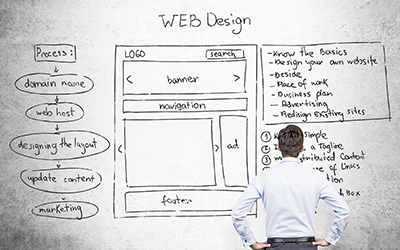
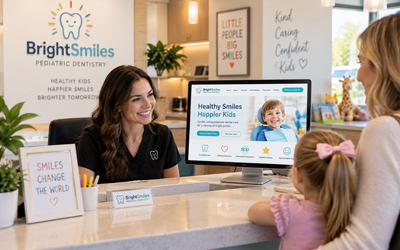
Most dentists and healthcare providers invest in a website expecting it to generate new patients, yet many are left wondering why traffic is not converting. The issue may be SEO visibility. However, more often, the problem lies in what the website is missing to increase conversions. Strong dental practice marketing and effective marketing medical strategies depend on more than just the design. It requires a blueprint, psychology, and a clear path for patient action.
Many dental and healthcare websites focus heavily on content for SEO optimization. Some designs even include strategic calls to action or basic elements intended to encourage patient engagement. While these components are important for a well-structured website, without a clear strategy behind them, many websites fail to effectively guide visitors toward taking action.
Patients should never have to search for what to do next. A high-performing website clearly communicates who you are, what you offer, and the value of your services, making the next step obvious and easy.
Calls to action such as scheduling an appointment, calling the office, or submitting a form should be clearly visible and strategically placed throughout the page. However, simply adding buttons without first establishing credibility and value limits their effectiveness. Without proper context and a compelling reason to act, a call to action becomes easy to ignore rather than a meaningful prompt that drives patient engagement. Without context and value, a call to action becomes just another element on the page rather than a meaningful prompt.
According to a study by HubSpot, websites with clear calls to action can increase conversion rates by over 200% (HubSpot, 2023). Without this structure, even the most well-executed medical marketing agency strategies will fall short because visitors are left without direction.
Trust is one of the biggest drivers of conversion in healthcare. Patients are making decisions about their health, not just a purchase. Many websites lack strong credibility indicators, such as:
In medical and dental practice marketing, these elements are essential because patients often compare multiple providers before making a decision. The same applies across all healthcare specialties. A site that lacks proof of results creates hesitation and lowers conversions.
One of the most overlooked issues within Trust Signals is messaging that sounds identical to every other practice. Phrases like “we care about our patients” or “state-of-the-art technology” do not differentiate your brand. Patients are looking for clarity and specificity. What makes your practice different? Why should they choose you over another provider? A strong medical marketing agency will focus on positioning and messaging that highlights unique strengths such as specialized treatments, patient comfort focus, or advanced techniques.
More than 60% of healthcare-related searches now occur on mobile devices (Statista, 2024). Despite this, many medical websites are still designed with desktop in mind. Slow load times, hard-to-tap buttons, and cluttered layouts create friction. Effective marketing of medical services requires a seamless mobile experience where users can quickly find information and take action without frustration.
Even if your website looks great, it will not convert if the right audience never finds it. High-quality healthcare marketing depends on content that aligns with what patients are actually searching for, not just a checklist of keywords. Modern SEO is no longer about stuffing phrases into pages. It is about delivering meaningful, relevant information that answers real patient questions and builds trust before they ever contact your office.
This includes well-developed service pages, educational blog content, and location-relevant pages that support patient acquisition and local SEO. More importantly, it requires depth and clarity. Patients are searching for symptoms, treatment options, costs, recovery expectations, and outcomes. Websites that address these topics clearly and thoroughly are far more likely to rank well and convert visitors into patients.
Search engines have evolved to prioritize high-quality content that demonstrates expertise, authority, and trust. This means your website must not only include the right topics but also present them in a way that is helpful, accurate, and easy to understand. In many ways, SEO is the execution of a strong marketing strategy. It reflects how well you understand your audience and how effectively you communicate value.
Websites that consistently publish relevant, high-quality content generate significantly more leads. According to Demand Metric, content marketing produces 3 times as many leads as traditional outbound marketing while costing 62% less (Demand Metric, 2022). By focusing on content that educates and informs, rather than simply trying to rank, healthcare providers can create a sustainable system that attracts the right patients and supports long-term growth.
Conversion does not always happen on the first visit. Many practices fail to capture and nurture potential patients who are still researching. Tools such as email capture forms, retargeting ads, and automated follow-ups are critical components of website conversion optimization. Without them, valuable traffic is lost permanently.
The gap between website traffic and patient bookings often comes down to strategy, not effort. Strong dental practice marketing strategies and effective marketing medical programs require a combination of clear calls to action, trust-building elements, optimized mobile design, and targeted content. Partnering with an experienced medical marketing agency can help identify these gaps and implement systems that consistently convert visitors into patients. By focusing on what your website is currently missing, you can transform it from a passive online presence into a powerful growth tool for your practice.
File ID 83645904 | © Ayse Ezgi Icmeli | Dreamstime.com
Share:


 Copyright 2021-2026